
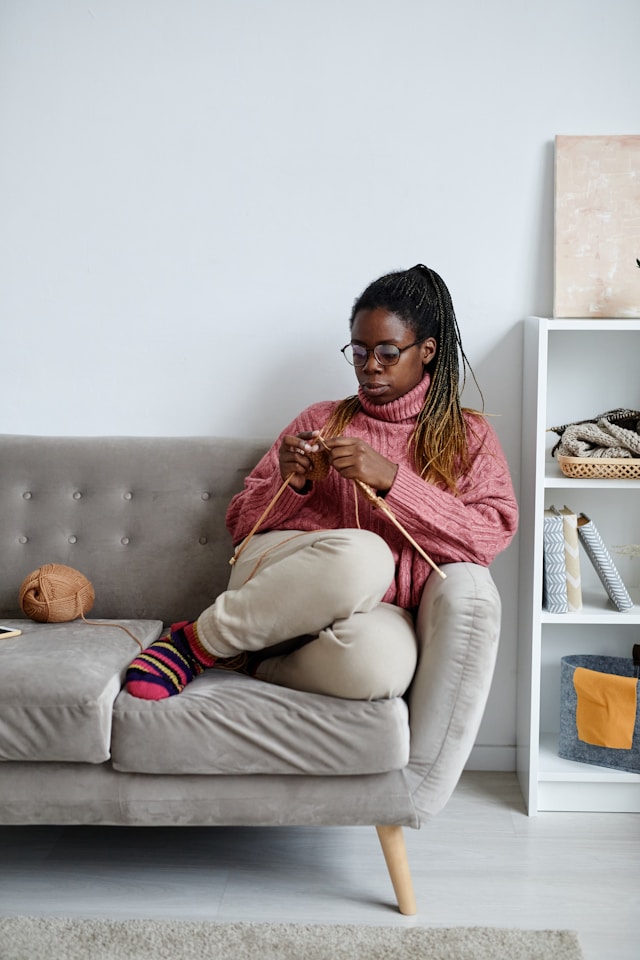
How to Knit or Crochet for Beginners: Easy Guide & Tips
You can pick up knitting or crochet with just a few tools and a bit of practice. Honestly, you’ll surprise yourself with how fast you start making useful stuff.
Start out with medium-weight yarn and the simplest tools you can find. Practice a couple of basic stitch patterns, and you’ll get the hang of it pretty quickly.
If you want quick results, go for crochet—it’s fast and sturdy, and you only need one hook. Knitting, on the other hand, uses two needles and gives you a soft, stretchy fabric that’s great for wearables.
Try both on some small projects. You might be surprised which one feels better in your hands.
Key Takeaways
- Grab a simple kit: medium-weight yarn and basic tools.
- Learn just a few stitches and make short little swatches.
- Try small projects to figure out if you prefer knitting or crochet.
Essential Tools and Materials
Getting started is easier if you have the right yarn, needles or hooks, and a few basic supplies. Pick out medium-weight yarn, a comfortable hook or needle size, and some simple tools to help you measure and finish your work.
Choosing Yarn and Yarn Types
Go for yarn that feels smooth and isn’t too slippery or fuzzy. For your first projects, worsted weight yarn (sometimes called medium or #4) is the way to go.
It works well with 4.5–5.5 mm tools and makes it easy to see your stitches.
Acrylic yarn is inexpensive, easy to wash, and perfect for practice. It slides smoothly on metal hooks and needles. Wool or wool blends are warmer and stretchier, though they might feel a bit sticky if you’re just starting out.
Check yarn labels for fiber content and care instructions. Lighter colors make it easier to see your stitches. Buy a couple of skeins from the same dye lot to avoid weird color changes mid-project.
Selecting Knitting Needles and Crochet Hooks
For knitting, grab a pair of straight single-pointed needles or a short circular needle. US 8 (5 mm) and US 7 (4.5 mm) are good starter sizes for worsted yarn.
If you’re crocheting, a 5 mm crochet hook (US H/8) is a solid choice. If your hands get tired, look for a hook with an ergonomic handle.
Metal hooks are slick and help if you crochet tightly. Wooden hooks have more grip, which is handy if stitches slip off.
It’s not a bad idea to get a small set of needles and hooks in a few nearby sizes. Interchangeable circular sets are nice if you think you’ll try different projects.
Match your needle or hook size to what the yarn label suggests.
Basic Crochet and Knitting Supplies
Keep a little kit nearby with these basics:
- Scissors or thread snips for cutting yarn.
- A tape measure for checking size.
- Yarn or tapestry needle for weaving in ends.
- Stitch markers to keep track of pattern changes or rounds.
- A row counter or notebook for tracking progress.
A project bag or box keeps everything together. If you want to get fancy, a blocking mat and pins help shape finished pieces.
Store leftover skeins in small bags or label them so you don’t end up with a tangled mess.
Understanding Yarn Weight and Labels
Yarn weight tells you how thick the yarn is and helps you pick the right needle or hook. You’ll see categories like fingering, DK, worsted (medium), aran, and bulky.
Worsted weight is the easiest place to start.
The yarn label usually has gauge info—like “4 stitches = 1 inch on 5 mm needles.” That helps you match the pattern’s size.
Labels also list the recommended hook and needle sizes and what the yarn’s made of.
Check the yardage on the label so you buy enough for your project. If a pattern says “worsted weight, 800 yards,” grab a bit extra to be safe and make sure the dye lots match.
Getting Started: Fundamental Techniques
You’ll pick up some simple, repeatable moves that make knitting and crochet work. Focus on tension, hand placement, and counting so your first rows look even.
Slip Knot and Slipknot Basics
Every project starts with a slip knot. Make a loop, cross the working yarn over the tail, pull a loop through, and tighten it around your hook or needle.
The loop should move easily but not fall off.
Leave a tail about 4–6 inches (10–15 cm) for small pieces, a bit longer for bigger projects. Practice loosening and tightening the knot until it slides but doesn’t come undone.
Use the slip knot to get your yarn onto the needle or hook. A good slipknot keeps your first stitches from slipping away.
Casting On and Starting Off
Casting on makes the first row of loops on your needle. Try the long-tail cast on for a neat, stretchy edge.
Measure a tail about three times the width of your project, make a slip knot, then use your thumb and index finger to form new stitches.
The knitted cast-on is stretchy and simple, while the cable cast-on gives a firmer edge if you want structure.
Count your stitches as you go—if you mess up here, the rest of the project won’t line up. Keep your tension even and check the first few stitches for size before you start the first row.
Mastering the Chain Stitch and Foundation Chains
The chain stitch is the base of most crochet projects. Start with a slip knot on the hook, yarn over, and pull through the loop to make one chain.
Repeat until you have the right number.
Keep your tension even by wrapping the yarn the same way each time. If your chains are too tight, the first row will be tough to work into. Too loose, and the edges will look sloppy.
Some patterns use a foundation chain as the first row (like chain 3 for a turning chain in double crochet). Pay attention to where you insert the hook—it’s usually the second or third chain from the hook, depending on the stitch.
Learning the Knit Stitch and Purl Stitch
The knit and purl stitches are at the heart of knitting. To knit, poke the right needle into the front of a stitch, wrap the yarn around, pull the new loop through, and slip the old stitch off.
To purl, bring the yarn to the front, insert the right needle from right to left, yarn over, pull the loop through, and drop the old stitch.
Mix knit and purl stitches to make textures: stockinette stitch (knit one row, purl one row) and garter stitch (knit every row). Switching between them takes a bit of practice, but it’s worth it.
Introduction to Crochet Stitches
Crochet has just a handful of basic stitches that go a long way. Learn single crochet (insert hook, yarn over, pull up a loop, yarn over, pull through two loops), half-double (yarn over, insert, pull through, yarn over, pull through three loops), and double crochet (yarn over, insert, pull up loop, yarn over, pull through two, yarn over, pull through two).
The slip stitch joins rounds or moves the yarn without adding height. Use it to finish rows or create seams.
Foundation chains set the width, and these basic stitches build the rest.
Pay close attention to where the pattern tells you to insert the hook—sometimes it’s into the chain, sometimes the back loop, or even a specific stitch for shaping.
Essential Knitting Stitches
Try out these stitch patterns: garter stitch (knit every row), stockinette (alternate knit and purl), ribbing (k2, p2), and seed stitch (alternate knit and purl every stitch). Each one feels different and gives a unique texture.
Learn basic increases like knit front and back, or yarn over, and decreases like k2tog or ssk. Yarn over adds a stitch and creates a hole—great for lace. K2tog and ssk lean in different directions, which helps with shaping.
If you drop a stitch, don’t panic. Use a crochet hook to pick it up or ladder it back onto the needle before it unravels too much.
Reading Patterns and Common Terminology
Patterns use a lot of abbreviations. Get familiar with CO (cast on), BO (bind off), k (knit), p (purl), yo (yarn over), k2tog (knit two together), ssk (slip, slip, knit), rep (repeat), and RS/WS (right side/wrong side).
Watch your stitch and row counts. A pattern might say “ch 20, sc in 2nd ch from hook”—so you’ll know exactly how many chains to make and where to start.
Use stitch markers and jot down notes. It’s easier to fix mistakes if you know where they happened.
Finishing and Weaving in Ends
Finish knitting by binding off. Knit or slip your stitches as you go, then pass each stitch over the next one to make a clean edge.
If you’re crocheting, wrap things up with a slip stitch and leave a tail.
Grab a tapestry needle to weave in your ends. Thread the tail, and run it through a few stitches in one direction.
Then double back the other way. This keeps the tail in place without making a bulky spot, and helps stop things from unraveling later.
If your project needs it, go ahead and block your work. Wet or steam blocking can help even out the stitches and get the shape just right.
Trim the tails close, maybe about 1/8 to 1/4 inch from the fabric. That should help keep them from fraying, but don’t get too close—nobody wants a loose end popping out.